Stealth camping is sleeping in your vehicle without setting up a visible campsite. You park somewhere that allows overnight parking, sleep inside your vehicle, and leave in the morning.
The difference between stealth camping and dispersed camping? Stealth camping is a quiet, temporary, and visually unobtrusive way to camp.
The basic idea is simple: keep a low profile, follow local parking rules, and leave the space as you found it.
How Does Stealth Camping Work in a Tune?
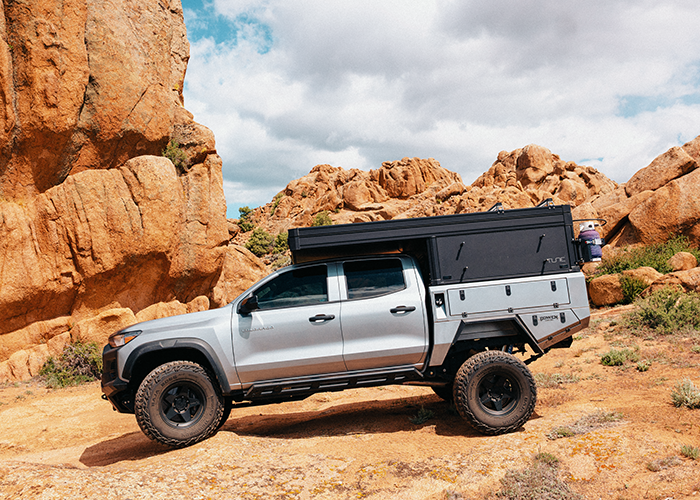
With a Tune pop-top truck camper, stealth camping means keeping the pop-top closed.
The raised roof creates the headroom for the camper's normal sleeping and living configuration. When the roof is closed, only a few inches separate the roof and the upper sleeping platform, so you can't use the normal bed platform for sleeping.
Instead, you'll need a separate sleeping setup in the truck bed. This could be a camping pad, mattress, removable platform, or another setup that fits your truck and how you use the bed.
This is the main difference between normal camping in a Tune camper and stealth camping. With the roof raised, you have a dedicated sleeping platform over the cab and enough room to stand and move around. With the roof closed, you lose the standing room and upper sleeping platform and must use the truck bed as the sleeping area.
That also means the way you organize the interior matters more. A simple DIY setup could be as easy as putting a mattress on top of a bench or other flat surface to create a place to sleep. Tune interiors can be configured with benches, tables, and storage to fit different uses, so you can build an interior that works for everyday camping while still giving you a practical place to sleep with the roof closed.
Before you park for the night, make sure everything you need is accessible so you can settle in without raising the roof or moving gear outside.
Know Where You Can Park
Stealth camping is only legal when overnight parking or camping is allowed where you’re staying. A quiet or empty parking spot doesn’t necessarily mean you’re permitted to sleep there.
Before settling in, check signs and local regulations for:
- Overnight parking: Some streets, parking lots, trailheads, and public areas prohibit overnight parking or limit the hours you can stay.
- Time limits and permits: Parking may be allowed but restricted to a certain amount of time or require an overnight parking or camping permit.
- Street restrictions: Check for scheduled restrictions like street sweeping, snow removal, or events.
- Private property: An empty business lot or other private property isn’t automatically available for overnight use. Get permission before staying.
- Public lands and trailheads: Rules vary by location and land-management agency. Some allow overnight parking or dispersed camping, while others prohibit it or require a permit.
When in doubt, check the rules for the specific city, county, or land-management agency where you plan to stay. Regulations can vary even between nearby locations.
Stealth camping isn’t a way around a “No Overnight Parking” or “No Camping” restriction. If overnight stays aren’t permitted, find another location where they are.
Prepare Before You Park
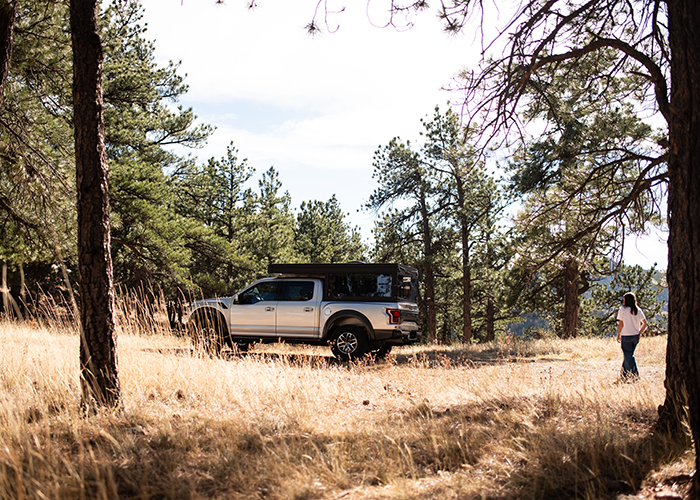
With the pop-top down, you have less room to move around, so set up as much as possible beforehand.
Make your bed, charge your devices, fill your water, and move anything you need from the cab into the camper. Keep things you'll need during the night within reach, including water, your phone, a charger, and extra layers to keep warm.
One Tune owner who has spent more than 20,000 miles and 80 nights in their camper describes the truck and camper as two separate spaces. Even simple things can require getting out of the camper and walking around the truck.
For normal camping, that's easy to deal with. When you're trying to stay inside for the night, it's worth a little extra planning.
Consider Aluminum Doors for Privacy
Tune campers are available with two awning door options: aluminum or glass. Aluminum is the standard door configuration, while glass is an available upgrade.
The large glass awning doors bring in natural light and make it easy to see outside. They also feature a privacy-smoked finish with 9% Visible Light Transmission (VLT), blocking 91% of visible light. While the tint provides privacy, interior lighting at night can still make the camper more noticeable from outside.
If you plan to stealth camp regularly, aluminum doors offer the most privacy. The solid panels eliminate direct visibility into the camper, so you don't have to rely on the glass tint or window coverings when using interior lights.
Aluminum awning doors can also be configured with a slider vent window, giving you the option to add airflow while still maintaining more privacy than a full glass door. The built-in bug screen also lets you leave the window open for ventilation without letting insects in.
If you choose glass doors, blackout curtains or window coverings can provide an additional layer of privacy when you're parked overnight. Either way, it's worth considering how visible your interior will be before you park.
Read this blog to help you choose which awning doors will best meet your needs.
Keep the Setup Low Profile
Once you're parked, keep everything inside the truck.
Don't put out chairs, open the awning, spread gear around, or use exterior lights. Keep interior lighting low and make sure light isn't visible through the windows.
Ventilation also takes planning with the pop-top closed. The MaxxAir roof fan can circulate air with the vent closed, but you may want additional airflow depending on the conditions. A small fan or cracked slider vent window can help. Just be sure to balance ventilation with privacy.
If you're cooking, keep it simple or eat before you park. The goal is to minimize unnecessary light, noise, smells, and activity.
Plan for Bathrooms and Water
Tune truck campers do not include built-in bathrooms or showers, so you'll need to plan around those things.
Tune owners who spend significant time on the road use public bathrooms, gyms, recreation centers, or other facilities as part of their routine. One owner who has documented stealth camping in their camper describes planning around public bathrooms and showers rather than trying to fit everything into the camper.
For an overnight, it can be as simple as taking care of those things during the day, filling your water, getting food, and then finding your parking spot.
The Bottom Line
Stealth camping in a Tune camper requires a different setup than normal camping.
Keep the pop-top closed, use a separate sleeping setup in the truck bed, and plan around the reduced interior space. If privacy is a priority, aluminum awning doors are worth considering. Get your food, water, and essentials organized before you park, and make sure you're staying somewhere that allows overnight parking.
Tune campers let you use the camper at full height when you're camping normally, or keep it closed when you need a place to sleep that doesn’t draw attention. With the right setup, you can use the same camper for both, as long as overnight parking is permitted where you plan to stay.
FAQS
Why would you want to stealth camp?
Stealth camping can be useful when you need a place to sleep that’s temporary and doesn’t draw attention. It can make sense during long road trips, for early trailhead starts on public lands, or when you're traveling through an area where a campground isn't convenient.
Where can you legally stealth camp?
Only stealth camp where overnight parking is permitted. Check local signs and regulations for overnight parking restrictions, time limits, permits, private property, street sweeping, and trailhead rules. Stealth camping does not override local parking restrictions.
Can you stealth camp in a Tune camper?
Yes. Stealth camping in a Tune camper means keeping the pop-top closed and using a separate sleeping setup in the truck bed. With the pop-top down, there is not enough vertical space to sleep on the upper sleeping platform.
Are aluminum or glass doors better for stealth camping?
Aluminum doors provide more privacy because the solid panels prevent people from seeing directly into the camper. Tune offers both aluminum and glass awning doors, with aluminum as the standard configuration and glass as an available upgrade. If you plan to stealth camp regularly, aluminum doors are the better option for keeping the interior out of view.


