By Noah Bartron
One question people often ask before purchasing their truck bed camper is, “How will this affect my gas mileage?” I tracked my MPG before and after getting my Tune M1L installed, and I’m here to share my process and results to help inform your decision.
About My Toyota Tacoma
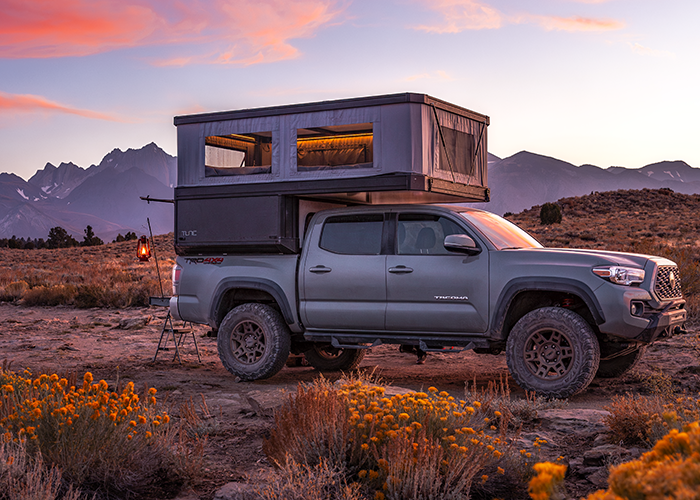
My vehicle is a 2013 Toyota Tacoma Double Cab Long Bed, and I recently installed the Tune M1L truck camper. Like many Tacoma owners, I value the platform for its legendary reliability and off-road capability, even though it has never been known for outright speed, power, or fuel efficiency.

To improve performance, my Tacoma is equipped with a TRD supercharger, along with a URD air intake and exhaust system. I also regeared the axles to 4.88 gears to improve low-end torque. Suspension upgrades lift the truck approximately 2.5 inches, and it rides on Method 703 wheels wrapped in 35x10.5R17 Kenda Klever tires. The truck currently retains stock front and rear bumpers with no additional armor installed.
Background and Daily Use
I’ve driven my Toyota Tacoma roughly 11,000 miles as both a daily driver and an adventure vehicle. My typical commute is a 25-mile round trip on city roads with a maximum speed limit of 45 mph. Throughout 2025, my travels have taken me all across Colorado, including highways, backroads, and off-pavement terrain.
During the spring, summer, and fall of 2025, I ran a Leer fiberglass topper paired with a Thule Motion XT cargo box, before making the major upgrade to the Tune M1L.
My M1L is the standard over-cab length. I don’t have any side-mounted accessories, and the only roof component on the camper itself is a Maxxair fan. For improved aerodynamics and utility, I added a Sherpa Equipment Animas 21 roof rack with fairing, mounting a Weboost antenna and four traction boards. These sit lower than the height of the Tune M1L, helping minimize additional wind resistance.
How I Track My MPG
As a nod to my grandfather, I track fuel economy the old-school way by using a small notepad in my truck. Each fuel stop includes:
- Date
- Odometer reading
- Fuel price per gallon
- Total gallons filled
- Total cost
- Trip mileage (reset at each fill-up)
- Estimated MPG (rounded to the nearest quarter MPG)
Miles per gallon are calculated by dividing trip mileage by gallons filled. I don’t specifically track miles driven in 4WD, which make up roughly 10% of my total mileage, since the Tacoma serves as my daily driver as well as an overland rig.
Topper vs. Tune M1L MPG Comparison
With my previous setup (Leer topper and Thule cargo box), I averaged approximately 13 MPG (12.9) over 9,700 miles.
With the Tune M1L installed, my current average is approximately 11.5 MPG over 850 miles.
Interestingly, the best MPG I’ve ever recorded - 16 MPG - came from a round trip on Colorado backroads, reinforcing the idea that the best miles (and smiles) often come from slower, more scenic adventures.
Conclusion: Is the MPG Trade-Off Worth It?
So far, my real-world fuel economy aligns closely with Tune’s estimates. They predicted a 2–5 MPG decrease, and in my case, the drop has been closer to 1.5 MPG. I’ve spent considerable time refining a minimalist packing list to reduce weight and improve efficiency.
Practicing mechanical sympathy goes a long way toward maintaining reliability, drivability, and safety. Heavier tires, wheels, and exterior accessories will always reduce fuel efficiency, regardless of vehicle platform.
What Other Tune Owners Are Saying:
“I've got it on a 2017 Raptor with the 3.5. Lifted 2.5in, steel underbody, 35s, and a 600-lb interior build-out. It handles the camper amazingly. All the power in the world. I've lost about 2 MPG with everything, including exterior accessories. When it was just the Tune M1 and camping gear, I lost less than 1 MPG.”
— Jimmy Bernat
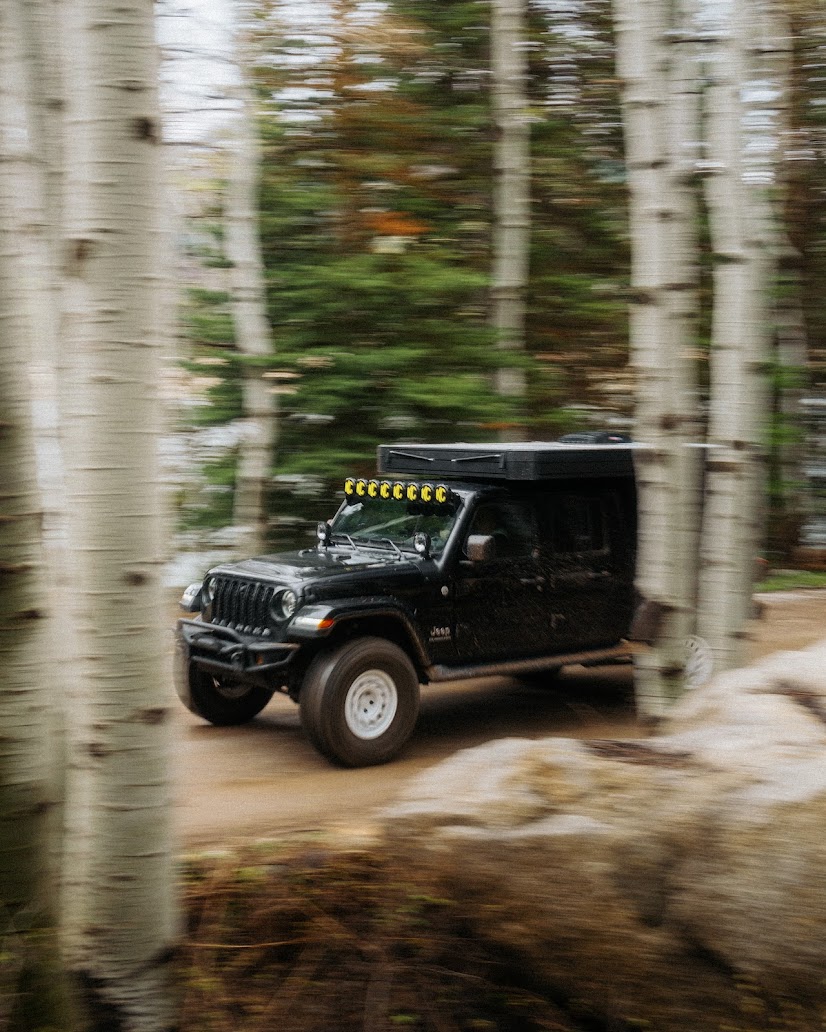
“Diesel Gladiator. I get 19–20 MPG around town and up to 23 MPG highway. On 37s with a 2.5-inch lift and loaded with camping gear. Wind plays a big role—Kansas and Colorado crosswinds can drop it to 14 MPG.”
— Robert Espuga