By Noah Bartron and Lauren Jenkins
Winter is approaching; the days are growing shorter, the temperatures are dropping, and the mountains are blanketed in fresh powder. For many, the arrival of winter signals a time to hunker down indoors and wait for warmer days. Shorter daylight hours and frigid weather often keep people inside. But it doesn’t have to be that way.
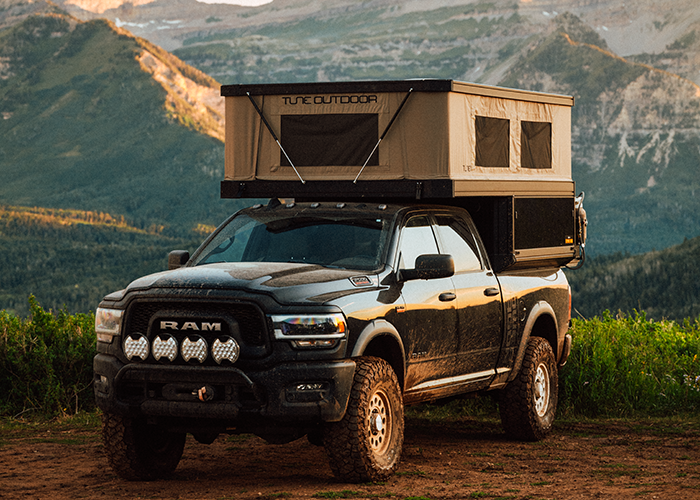
With a Tune truck camper, you can embrace the season and experience the magic of winter like never before. Instead of retreating, venture out and make the most of crisp mornings, snow-covered trails, and peaceful mountain landscapes. Winter brings a unique kind of adventure, and with Tune, it’s all within reach.
Whether you prefer to DIY your insulation setup or install one of Tune’s premium winter accessories, there are countless ways to winterize your Tune M1 or M1L and keep your adventures going strong through the coldest months.
Let’s take a look at some commonly asked questions and learn how some of our Tune owners are preparing their rigs for winter.
Is the canopy better than a tent?
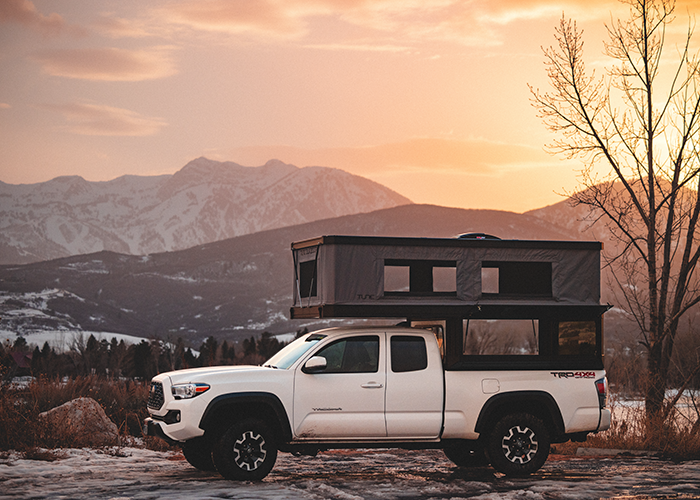
The canopy material, used on both the M1 and M1L, is 600D (denier) polyester fabric with an oxford weave and a ripstop grid. If you are not familiar with that measurement, denier is a unit of measurement for the fabric’s thread thickness, and as Google defines it, “the weight in grams of a single strand of that fiber that is 9,000 meters long.”
A higher denier number indicates a thicker, heavier thread, and in this application, means a more durable fabric. For perspective, the highest end four-season winter mountaineering tents are made of material between 15D and 70D thick.
During the manufacturing process, it gets fully taped seams and a PU coating (a durable and flexible layer of polyurethane) on the inside for complete waterproof construction. And a bonus, the material has been treated to be fire resistant, in case you make that hot chocolate a bit too hot.
How does the insulation pack work?
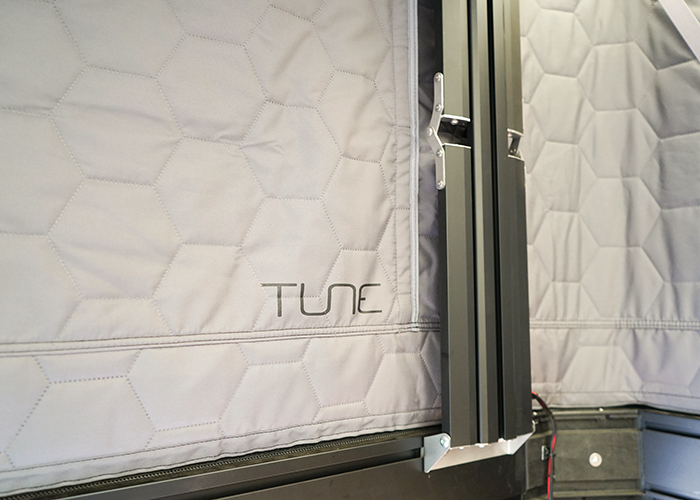
The Insulation Pack covers all four sides of the canopy while maintaining access to all six windows. Crafted from quilted, custom-made 600g thin laminate insulation, it’s the perfect additional layer to your canopy if you’re looking to stay warmer and more comfortable through the colder months.
Ashley O., Tune M1 owner, shared her experience camping in the mountains, where temperatures dropped into the mid-20s. She reported that the combination of the Truma Heater and Insulation Pack “heats great and efficiently.” Now, Ashley is looking forward to using her Tune M1 for ski resort parking lot camping to maximize her time on the slopes.
How does the Truma Varioheat Eco Heater improve winter camping?
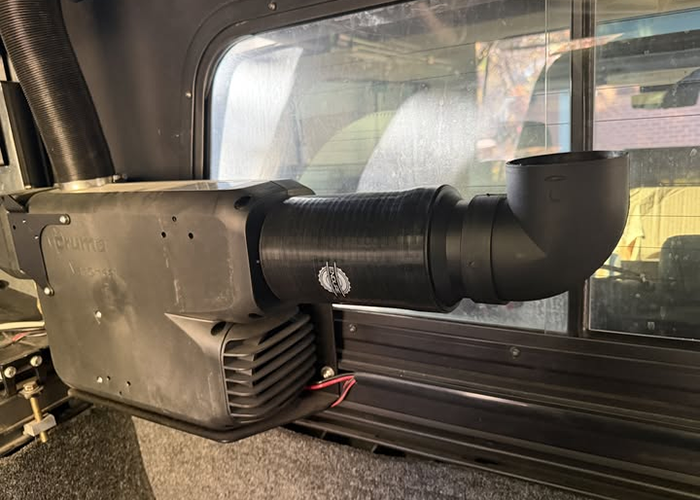
Another popular option among Tune owners is the Truma Varioheat Eco Heater; a compact, lightweight system that delivers quick, efficient propane heat. The Truma heater makes it easy to keep your space warm and comfortable, even on adventures up to 11,000 feet in elevation.
“The Truma is worth every penny in my opinion. I paid full price and don’t regret it—used from sea level to 10,000 ft and had no issues. It works very well in all conditions, and I use it a lot more than I ever thought because of how convenient it is.” -Jared H.
The Truma Heater Kit includes the Truma Varioheat Eco Heater, an LPG Tank Mount and a 10 lb. LPG Propane Tank, ensuring a dependable fuel source and a sleek, secure mounting solution for your setup.
Will the Hest mattress help me stay warm?
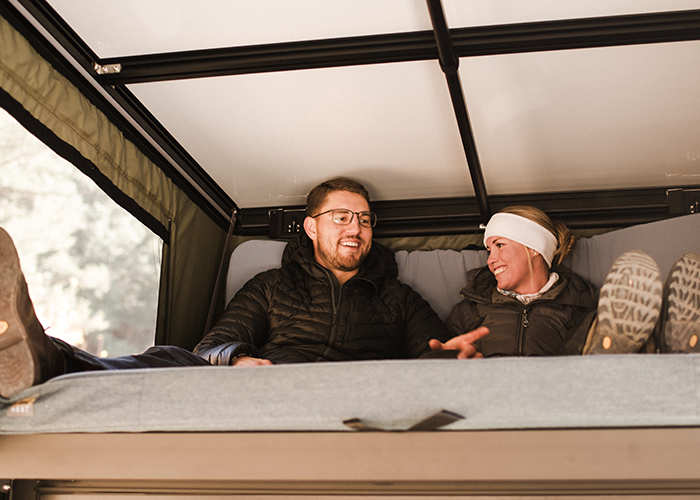
The Hest mattress is widely considered extremely comfortable among Tune owners. The Dually four-inch memory foam mattresses consist of two layers to create the “comfort blend.” The top two-inch layer is made of softer, more plush foam that your body can “meld into.”
The lower two-inch layer is made of a firmer foam, in comparison to the top layer, helping with support. The cover is highly moisture repellant, which is particularly helpful for condensation.
The combination of the multi-layer foam and cover creates an R-value of 8.8, which is extremely high for an outdoor mattress and far superior to any other foam mattress. Competitive camper mattresses are typically within the R-value range of 7 to 10, and winter backpacking sleeping pads within the R-value range of 3 to 9, all being air-filled.
A sleeping pad is your main line of defense against losing heat to the cold ground underneath you. That means you can have the warmest sleeping bag in the world, but if you have a pad that’s not insulating enough, you’ll still be shivering in your tent. R-Value, or a pad’s ability to resist heat loss, has become the standard way to convey how warm a sleeping pad is, similar to temperature ratings for sleeping bags. R-values generally range from 1-3 for a summer pad, 3-5 for a three-season pad, and above 5 for a winter pad.
Having a temperature and thermal regulating mattress like the Hest Dually is important for all conditions and best served for such frigid conditions. For those not familiar with R-value, backpacker.com did an excellent job explaining the term.
Can I DIY more insulation?
In addition to all of these accessories offered by Tune, many customers have experimented with creating their own installation setups to keep themselves comfortable and warm all winter long. Let’s take a look at what some Tune owners are coming up with.
DIY FRP Insulation Panels
One Tune owner, Noah, has created insulation panels for the ceiling of his camper in both his M1 and M1L. When figuring out the best way to build these panels, Noah stated that it was important to him for them “to be lightweight, simple, have a thin profile, all while being conscious of price.”
The panels are made from outdoor carpet, foam board, and reflective insulation, all stacked and glued together, then attached to the ceiling by velcro. Noah notes that these panels have not had any effect on opening and closing his camper saying that the camper “still closes without any issues with all of my winter bedding inside, which I was very excited about.”
- The process starts by measuring and cutting the foam boards, test fitting on the ceiling, then using the foam boards as a template to cut the carpet and Reflectix to match.
- Use the gaffer tap along the perimeter of the foam boards, and spray adhesive on one side of the board. Lay your Reflectix down, spray on top, and lay your carpeting down. Flip the foam board over, spray the adhesive, and then lay down your carpet.
- “I used three strips of adhesive velcro (hook side) along the length of each ceiling panel, then attached the insulation panels to the velcro (the carpet grabbed nicely, almost as though it was loop velcro),” said Noah.
Insulation Material List:
- One roll of Reflectix
- 6’ wide, 20’ long of CARPET
- 5 cans of SPRAY ADHESIVE
- 3 sheets of INSULATION PANELS
- One roll of HOOK VELCRO
- Two rolls of GAFFER TAPE
Do you have any additional winter camping tips?
Yes! Here are some tricks to help you stay even warmer in the winter.
- If you have a heat source in your camper, keep it close to your water container to prevent freezing.
- Ventilation is extremely important to prevent condensation, which will turn into a buildup of ice, then making your items wet once it melts. It will help significantly if you keep your Maxxair fan vent opened with the fan off or on a low setting, or slightly opening your windows.
- Add a carbon monoxide detector if you’re using a Little Buddy or alternative heating system without ventilation