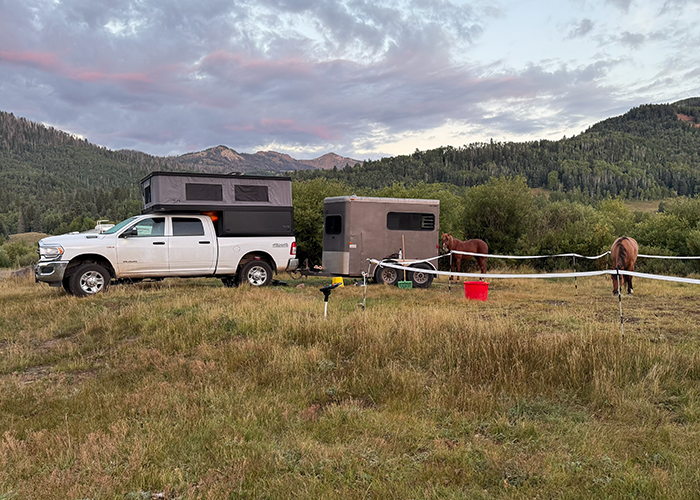
There is something magical about waking up exactly when the birds do. No early morning rush, just waking up to the sound of bird calls. Zack and Lina use a Tune pop-up canopy camper attached to their truck to make that possible. They are already parked in the right habitat as everything comes to life. No commute, no setup, just waking up to immerse themselves in their environment. That is the difference a Tune can make.
Birdwatching Gear: What you need (and how to store it)
At minimum, you’ll want:
- Binoculars for quick spotting and tracking. Some solid options include:
- A spotting scope: These offer higher magnification than binoculars, allowing for detailed identification at longer distances. Nikon and Swarovski are great options for scopes as well.
- A reliable bird ID app or paperback field guide to help identify birds.
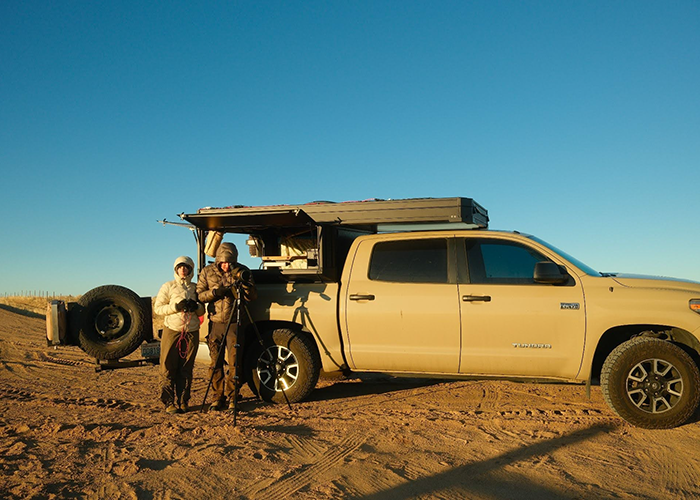
Storage matters more than you might expect. With a Tune setup, gear stays organized and accessible. Zack and Lina Riley have a Vecel Camper System inside their truck camper. This is where they like to store their birding gear. It helps keep them organized, while keeping everything they need within reach. That way, they are always ready when the birds start calling.
For a lighter-weight interior, Tune developed its own designs starting at just 70 lbs. Built to maximize storage and functionality, these interiors provide a secure place to keep your gear tucked away while still keeping it easily accessible. While currently available only to existing Tune owners, they will be available to everyone soon.
Explore Tune interiors here.
Why a Truck Camper Changes the Birding Game
Birding requires both patience and position. A Tune truck pop-up tent lets you optimize both. Instead of having to wake up at 4 a.m to drive to your birding spot, you’re already where you need to be. You can be parked at the edge of a river or tucked into a forest clearing, so when you wake up, you’re already in the middle of the action.
As Zack Riley from Tune Outdoor puts it:
“A lot of birds are elusive, so they don’t stick around. Weirdly, animals trust vehicles; they don’t trust you when you’re on your feet. It’s like a hide on wheels.”
That small change makes a huge difference. Staying inside or near your vehicle keeps you from disrupting the environment, and with a Tune M1 or Tune M1L, you can take it even further.
Pop open the side panels, and suddenly:
- You’ve got visibility without exposure
- You’re elevated just enough for better sightlines
- You're sheltered, still, and quiet
- Essentially a blind/hide on wheels
“When you pop the side of the camper out, it’s almost like a blind or a hide. You enclose yourself in the canvas, and they don’t see you,” Zack said.
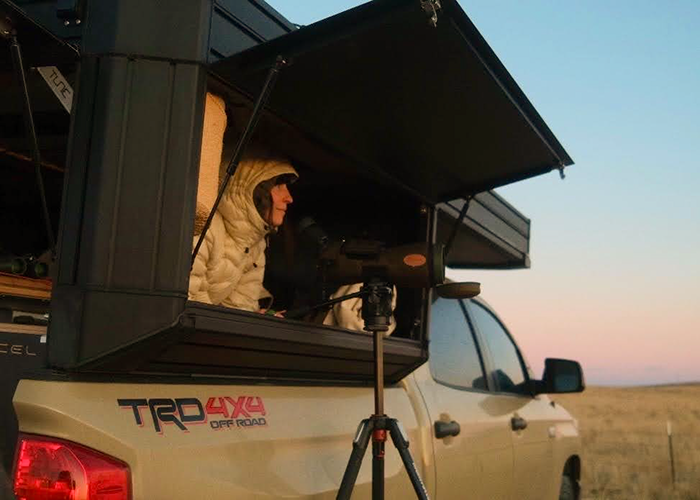
It’s a simple concept, but incredibly effective. You’re part of the landscape without intruding on it.
Birding Smarter: Tools & Techniques
Technology has become an incredibly useful tool in the world of birding.
Apps like Merlin Bird ID have changed the game.
“If a bird is singing, you can record it, and it will recognize the bird call,” Zack said.
Pair that with eBird, which is a “global citizen science data platform.” This means users can submit bird sightings, creating a massive, real-time database with accurate population counts.
These tools don’t just help you identify birds; they help you find them.
And for deeper learning, classic field guides like the Sibley Guide to Birds are always incredibly informative.
“When you look at a range map on Sibley or Merlin, it tells you where they winter, where they summer, and their migratory route, so you can always figure out where you need to be,” Zack said.
Colorado, in particular, is a hotspot for migratory species. With the right timing and a flexible setup, you can follow the movement and stay in position.
More than Birding: Pairing the experience
One of the best parts about birding? It layers seamlessly into so many other activities.
- Hiking through alpine terrain
- Camping along remote rivers
- Photography at sunrise and golden hour
- Even snowshoeing in colder months
These are just a few of the ways Lina and Zack pair other activities with birding.
Birding adds a new dimension to any environment. Once you start paying attention, every stop has the potential for a new discovery.
“It makes everywhere in the world exciting,” Zack said. “Each new state has different birds, and the Tune allows you to experience that.”
The Takeaway
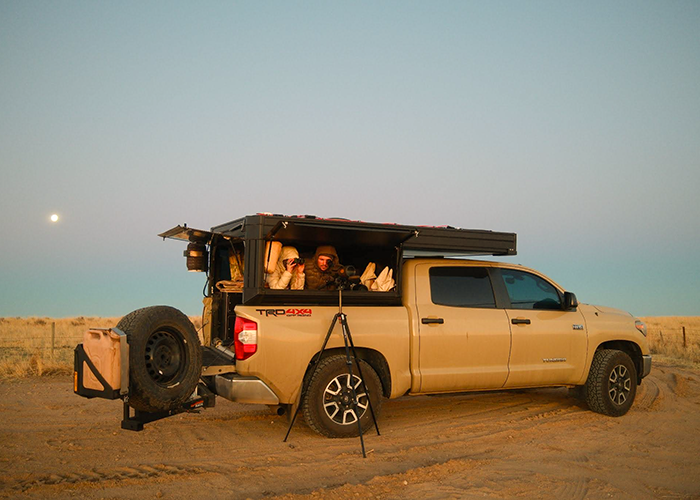
Birding is about being present, prepared, and positioned. A Tune truck custom camper doesn’t just support that, it enhances it.
You are quieter, closer, and more flexible than you would be on your feet. And more importantly? You are already there when it matters.
Because the best sightings don’t wait.
Build your ultimate birding rig
FAQ’s
Will I miss bird sightings if I do not wake up early?
Yes, early mornings are typically the most active time for birds, so you may miss some sightings if you sleep in. One advantage of having a Tune camper is that you can stay right where you’re birding, eliminating the need for an early start. That said, birding can still be enjoyable later in the day, especially in the evening or in areas with high bird activity.
How can I avoid being seen by birds while birdwatching?
Birds are very alert to movement, sound, and unusual shapes. The goal isn’t so much to avoid being seen as it is to avoid disturbing them. Staying quiet and minimizing sudden noises makes a big difference. It also helps to remain in one spot and sit still for a while, allowing birds to get used to your presence and return to their normal behavior once they no longer see you as a threat.
Staying in a truck camper supports this approach because you’re already set up within the environment, rather than moving in and out or approaching on foot. That reduces your presence and overall disturbance. From there, you can watch quietly from a consistent spot instead of constantly repositioning, which makes you less noticeable to birds over time.