By Lauren Jenkins
When most people think about camping, they picture mountains with pine trees, alpine lakes, and cool air after sunset. It’s the classic image of getting outside.
But some of the best campsites aren’t in the mountains at all. They’re on the coast.
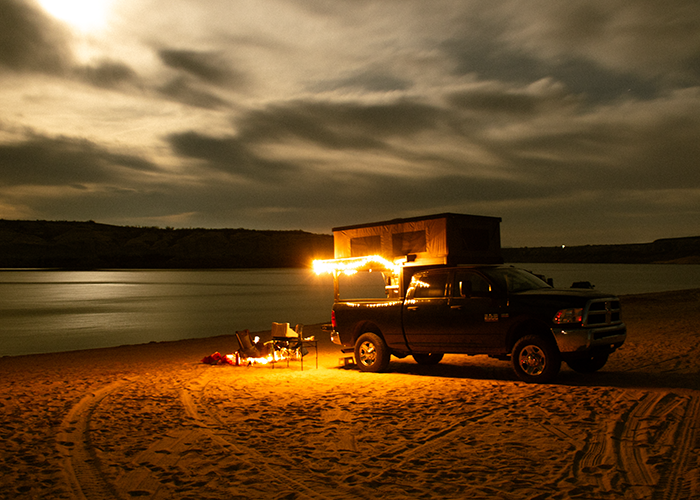
Beach camping offers a different kind of experience. Instead of forested campgrounds, you’re driving down sandy roads, setting up camp with the ocean in front of you, and falling asleep to the sound of waves.
Swap out mountain trails for exploring islets and coves or paddleboarding in the ocean.
Being miles from the nearest town on a quiet beach offers a specific kind of serenity that is hard to replicate. Coupled with the fact that beach camping does not generally require reservations or advance planning, it is easy to see why this type of camping is so appealing.
With the right truck setup and a few simple habits, camping on the beach can be one of the easiest and most rewarding ways to travel.
Keep Your Setup Simple
Beach environments can be tough on gear. Sand gets everywhere, salt air corrodes metal, and wind can show up out of nowhere.
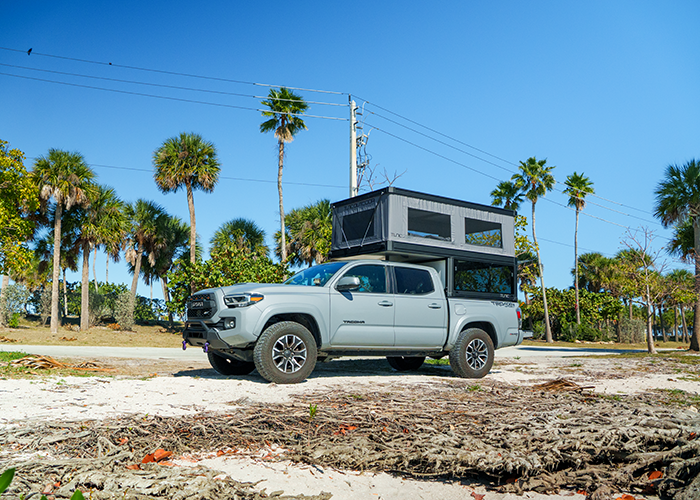
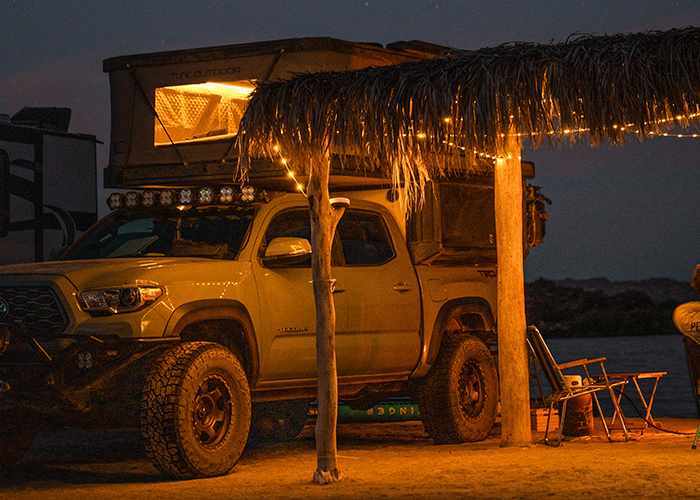
Pop-up truck campers, like the M1 and M1L, are especially well-suited for beach trips because they keep your sleeping space off the ground and protected from the elements. Plus, our new interior systems are rot and rust-proof, which makes them ideal for beach campers. They’re easy to clean and keep your gear organized and out of the sand.
The goal isn’t to bring everything. Instead, stick to the basics and only bring what you need.
What Gear Do You Actually Need?
Since beach camping is an entirely different world from camping in the forest or the mountains, we talked to Josiah Roe, the creative director of Baja Bound, to learn what gear you actually need. Here are his recommendations:
Tow Strap or Kinetic Rope
Driving through sand is an entirely different ball game. With less traction, even 4WD vehicles can sink or dig in quickly. Given that beach camping spots are often far from towns and towing services, having recovery gear is especially important. A tow strap or kinetic rope allows another vehicle to safely pull you out if you get stuck.
Lightweight Shovel
A Lightweight shovel is a simple but essential tool when driving and camping on sand. If your tires start to dig in, a shovel lets you clear sand around them and create a small ramp so your vehicle can regain traction. It’s also useful for leveling campsites, digging small fire pits where permitted, and managing campfires safely.
MaxTrax Traction Boards
MaxTrax traction boards, also known as recovery boards, provide a firm surface for your tires to grip when you’re stuck in soft sand. By placing them under your tires, you can often drive out without needing another vehicle to pull you free. They’re lightweight, easy to store, and can make the difference between a quick recovery and spending hours digging out.
P.S. We’re releasing our new MaxTrax mounts very soon, so you can easily attach them to the T-Track of your M1 or M1L.
Sand Management Is Everything
Anyone who has camped on the beach knows the reality: sand will get everywhere.
The key is creating a few simple systems that help keep it under control.
A small outdoor mat outside your camper door gives you a place to knock sand off your feet before climbing inside. Keeping a brush or handheld broom nearby makes quick cleanups easy. And having a dedicated spot for wet gear, such as surfboards, wetsuits, and sandals, helps keep the sleeping area clean.
These changes are small, but they will make the whole trip more comfortable.
Find Some Shade
While beaches are beautiful, the vast open landscape makes it difficult to escape the sun.
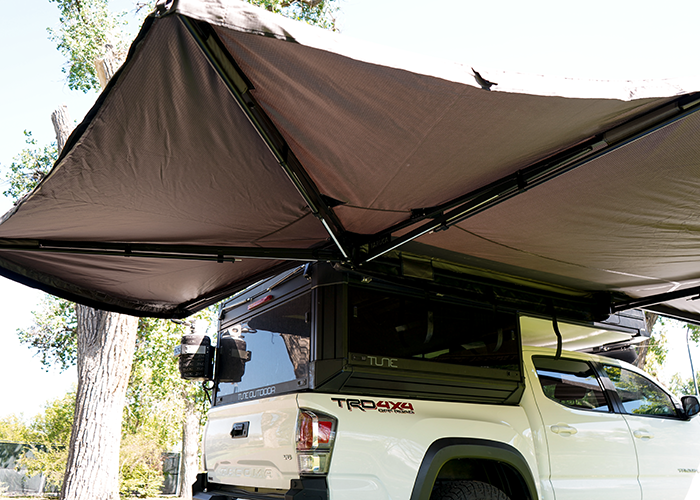
Once the sun gets high, having a place to escape the heat becomes important. A vehicle-mounted awning or simple tarp setup can create a comfortable shaded area for cooking, relaxing, or taking a break after a surf session.
This creates an ideal place to spend the middle part of the day when the sun is at its peak. Hydrating, reading, prepping food, or just watching the water.
Shade turns a basic campsite into a place that’s actually comfortable to hang out in.
Bring a Surfboard or SUP
Now that we’ve covered the basic tips for beach camping, let’s get into all the fun activities that open up when you camp next to the ocean.
If you’re camping near the ocean, bringing a board along is a no-brainer. Whether you’re chasing waves or prefer paddling calmer water, having a surfboard or SUP with you makes it easy to take advantage of good conditions when they show up.
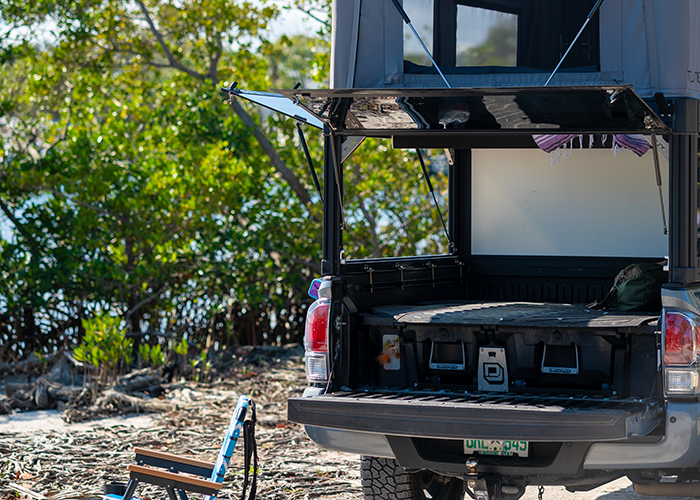
With a truck camper, boards can be mounted on a roof rack or on a side-mounted rack secured to the Tune’s T-track system. Side mounts make it easy to grab your board quickly for a session, while roof racks are ideal for carrying multiple boards or longboards and SUPs.
One of the biggest advantages of the Tune camper setup is that you can still pop the camper with boards on the roof when using upgraded struts, which means you don’t have to unload everything to make camp. Anyone who’s camped with boards knows how nice it is to skip the nightly gear shuffle.
Keeping your boards mounted and ready to go makes it easy to paddle out and get in the water as much as possible when you’re on your adventures.
Slow Down and Explore
One of the best parts of beach camping is how simple the daily routine becomes.
Wake up with the sun. Check the waves. Make some coffee. Go for a swim or explore the shoreline.
According to Josiah, one of the best parts of camping by the beach is “making fish tacos and cooking fresh seafood on the beach.”
Coastal environments offer endless small adventures from fishing on the beach, walking through tide pools, snorkeling rocky coves, or driving a little farther down the coast to see what’s around the next bend.
Sometimes the best camping trips are the ones you didn’t plan at all.
Respect the Places You Camp
Remote beaches feel special because they’re still wild.
Keeping them that way is simple:
“Leave no trace, try not to cut into new trails, stay in what feels like more established campsites. Look at the land use rules currently in place for the place you are exploring. Minimize impact; use common sense. Pick up the garbage, even if it’s not yours,” Josiah said.
These places stay open and beautiful when people treat them with care.
Beach Camping, the Simple Way
At its best, beach camping is about stripping things back.
A truck, a comfortable place to sleep, and a surfboard mounted on the T-Track. Maybe a small fire at sunset (we recommend the LavaBox propane fire pit).
The rest of the experience takes care of itself. You can enjoy waves rolling in, salt air, and miles of coastline to explore.
Find a quiet stretch of sand, pop up the camper, and settle in for the night.
FAQ’s
Can you use a pop-top truck camper for beach camping?
Yes! Truck campers are well-suited for beach camping because they keep your sleeping space off the ground and further away from the elements, which is especially important in sandy environments.
What do you do if your pickup camper gets stuck in the sand?
If your pickup with a camper topper gets stuck in the sand, the first step is to stop spinning the tires, since that will only dig the vehicle deeper. Lower your tire pressure to increase traction, then use a shovel to clear sand from around the tires and create a small ramp. Placing traction boards, such as Maxtrax boards, under the tires can provide the grip needed to drive out slowly. If that doesn’t work, another vehicle can pull you free using a tow strap or kinetic recovery rope.
What time of year is the best for beach camping?
Beach camping is generally at its peak in the early fall months, from September to October. These months offer warm daytime temperatures with cooler nights. Additionally, beaches are usually less crowded during this time because fewer people are swimming.
With a Tune M1 or M1L truck tent topper, beach camping is accessible year-round. An optional propane heating system and removable insulation pack help keep these campers comfortable in all four seasons.