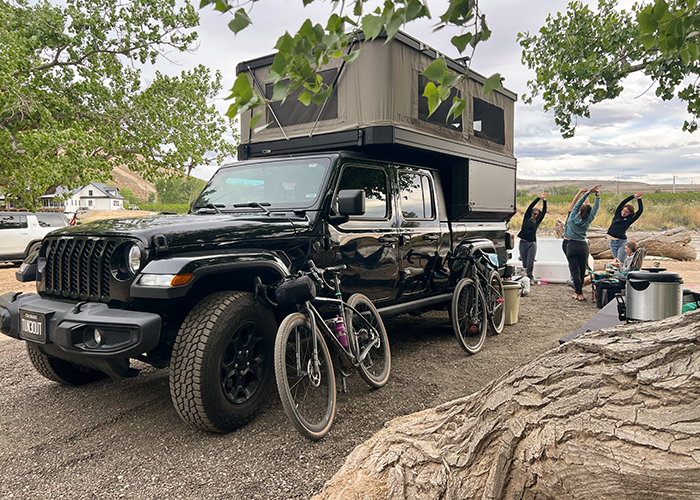
We’re back with another truck-and-camper pairing we love: a Tune pop top truck camper with a Ford Ranger. This combination creates the ultimate Ford Ranger camper.
Built for a Lightweight Camper
One of the tradeoffs of choosing a Ford Ranger is payload capacity. Depending on configuration, the Ranger offers a payload capacity of roughly 1,700–1,800 pounds.
Many traditional hard-sided and slide-in truck campers can weigh well over 1,500 pounds before adding water, batteries, propane, and gear.
This is where a Tune camper shines. Built with lightweight aluminum, the Tune M1L starts at around 350lbs on a Ranger, and the Tune M1 starts at around 420lbs. This helps preserve valuable payload capacity for passengers, bikes, skis, fishing gear, paddleboards, and everything else that comes along for the adventure. Plus, a lighter camper puts less strain on your truck and reduces the need for upgraded suspension and repairs.
What does “Mid-Size” Mean?
Previously, we discussed some of the advantages of choosing a full-size truck like the F-150. A larger truck bed provides more room for gear and generally comes with a higher payload capacity.
With a mid-size truck like the Ranger, you’ll generally give up some cargo space and payload capacity. The tradeoff? A truck that’s easier to live with every day and more agile on tight trails.
The Ranger's smaller size makes it easier to park, navigate tight spaces, and maneuver through technical terrain. Its shorter wheelbase and narrower overall width compared to full-size trucks help it feel more agile on tight trails. Combined with the lightweight design of a Tune pop-up truck camper, it creates a capable and efficient adventure rig without the bulk or weight of a full-size truck.
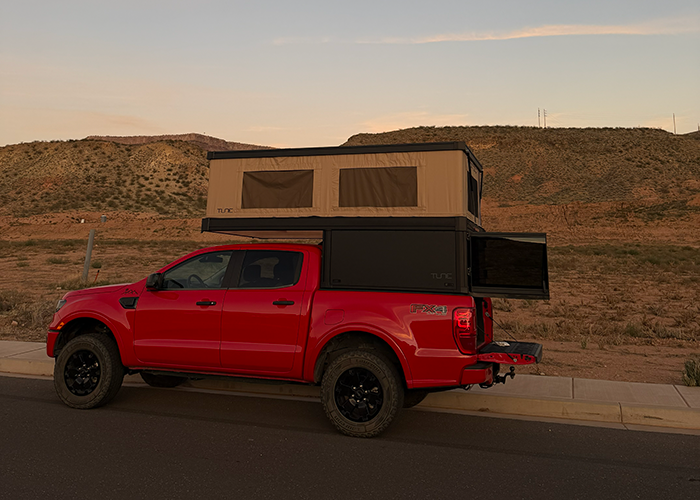
Daily Driving Without Compromise
One of the biggest advantages of the Ranger is that it still feels practical as an everyday vehicle.
Whether you’re commuting to work, running errands, or navigating city traffic, the Ranger is easier to maneuver and park in tight spaces than a full-size truck.
The Ranger also typically offers better fuel economy than larger trucks, making it a practical option for owners who use their vehicle for both commuting and camping. When paired with a Tune canopy truck topper, it strikes a balance between everyday drivability and weekend adventuring.
For Woody Petty, this versatility was a major factor in his decision. He can use his truck as a daily driver while still having a comfortable base camp for exploring destinations throughout the Western United States.
Superior Trail Agility
The Ford Ranger’s smaller footprint becomes even more valuable when you hit the trails.
Compared to an F-150, the Ranger is a few inches narrower and has a shorter overall length, making it easier to maneuver around obstacles and through tight sections of trail.
A smaller size also means less concern about brush, overhanging branches, and narrow trail corridors. On switchbacks and technical terrain, the Ranger's size can make navigating difficult sections feel less cumbersome than a full-size truck.
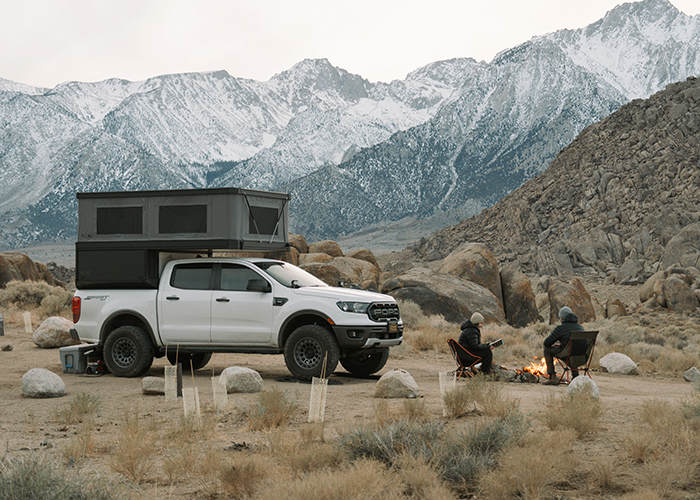
Paired with the Tune M1 or M1L, the Ranger remains a capable platform for accessing remote campsites and backcountry destinations while maintaining the maneuverability that many off-road enthusiasts appreciate in a mid-size truck.
Tune M1 or M1L?
The good news? The Ford Ranger pairs well with both the Tune M1 and M1L.
On a Ford Ranger with a 5-foot bed, the M1 offers approximately 173 cubic feet of interior volume, making it a good fit for travelers who prioritize maximum interior space and livability.
The M1L offers approximately 145 cubic feet of interior volume and is a great option for owners looking to reduce weight or maintain the most compact footprint possible.
Not sure which model is right for your Ranger? Check out our M1 vs. M1 Lite comparison guide for a detailed breakdown of dimensions, layouts, and use cases.
What do real customers like about the Ford Ranger x Tune combo?
For outdoor adventurer Woody Petty, the Ranger and Tune M1 checked all the boxes. He wanted a truck that was practical enough for everyday driving, capable enough for mountain adventures, and comfortable enough to support extended trips.
“The Tune M1 has honestly made the truck way more functional without feeling overly bulky or complicated,” says Woody. “It’s simple, lightweight, and easy to live out of, which is exactly what I wanted for the kind of trips I do.”
Alternatively, Claire and Jordan Anderson chose the lighter, slimmer Tune M1L for their Ranger. Their setup with the extended overhang and glass barn doors is the perfect size for the two of them and their toddler, Moss.
“Moss loves the Tune more than his own bed,” Jordan said.
Whether you go with the spacious M1 or the lighter M1L, customers rave about the Ranger’s performance with Tune campers on top.
Final Thoughts
While the Ford Ranger may not offer the payload capacity or cargo space of a full-size truck, it brings plenty of strengths of its own. Better maneuverability, everyday drivability, and trail-friendly dimensions make it an excellent choice for adventurers who value versatility.
If you’re looking for a truck that can confidently handle weekday commutes, weekend camping trips, and everything in between, the Ford Ranger and Tune custom camper shell make an excellent pairing.
FAQ’s
Can a Ford Ranger handle a Tune camping topper?
Yes. The Ford Ranger is a popular platform for Tune truck campers because it offers a balance of capability, efficiency, and maneuverability.
As with any truck camper setup, owners should verify their specific truck's payload capacity and ensure the combined weight of passengers, gear, and accessories remains within the vehicle's ratings.
What are the advantages of a mid-size truck for overlanding?
Mid-size trucks like the Ford Ranger are easier to maneuver on narrow trails, fit into tighter campsites, and are often easier to drive and park than full-size trucks. They also typically offer better fuel economy, making them a practical option for both daily driving and adventure travel.