After spending 20 years exploring the Rockies, Todd Ringler was ready to go farther.
A former climate scientist at Colorado State University who later moved into environmental policy work, he watched his list of adventures grow alongside his career.
“The list of things I wanted to do outside of work kept getting longer,” Todd said.
Eventually, Todd and his wife decided to take a break from work and make time for something bigger. For them, that meant pointing their truck north and setting out on a journey that would eventually take their Tune M1 all the way to Tuktoyaktuk in Canada’s Northwest Territories.
“We were definitely looking for something big and bold,” Todd said.
Finding the Right Camper for the Trip
Todd spent nearly three years researching campers, visiting overlanding expos, and figuring out exactly what he wanted from a rig.
“We were looking for something that was light, nimble, and comfortable,” he said.
After seeing a Tune in person, the decision became a lot easier.
“As soon as my wife walked into one of these, she was sold,” Todd said. “It was the right balance for two people.”
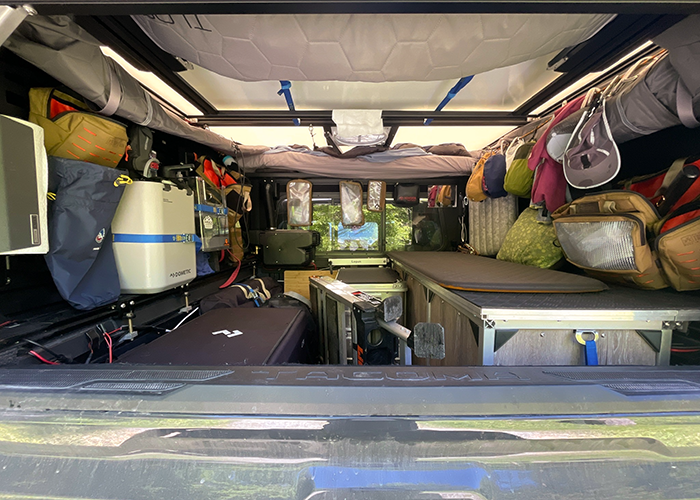
Todd got his Tune M1 in December 2024 and built out the interior himself, adding an 80/20 aluminum bench, a refrigerator, a sink, a water system, and additional storage. He also upgraded the truck’s suspension and added a Truma heater in preparation for colder, wetter conditions.
“The heater was key,” Todd said.
100 Days of Life on the Road
Todd and his wife traveled through the Pacific Northwest, British Columbia, and as far north as the Arctic Ocean, covering roughly 9,000 miles on their 60-day journey to Tuktoyaktuk. After his wife left the trip, Todd spent another 40-plus days exploring northern British Columbia and fishing for steelhead.
They kept most days intentionally simple: drive 100 to 150 miles, stop for a hike, find a remote campsite, cook dinner, and keep an eye out for wildlife.
“The amazing thing about the trip is that every day was relaxing,” Todd said.
After months of living in the M1, it was the everyday comforts that stood out most.
“The things in the Tune that keep us comfortable were the things we really appreciated,” Todd said.
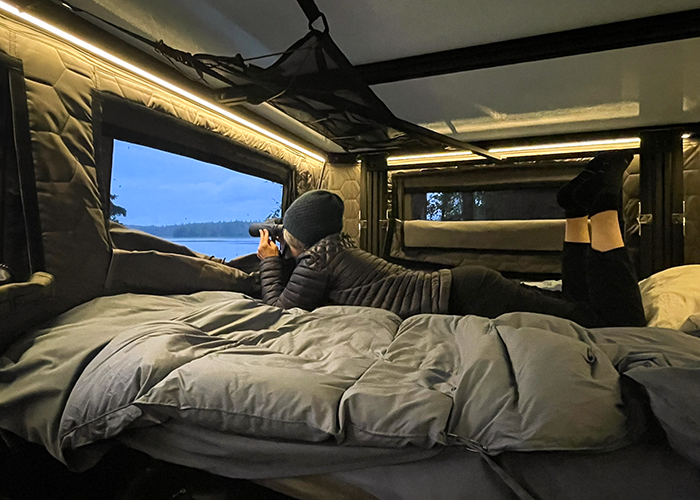
The bed, Truma heater, interior space, and water system made it possible to stay out longer and remain comfortable when conditions changed.
“When the weather was bad, I could live inside the Tune,” Todd said.
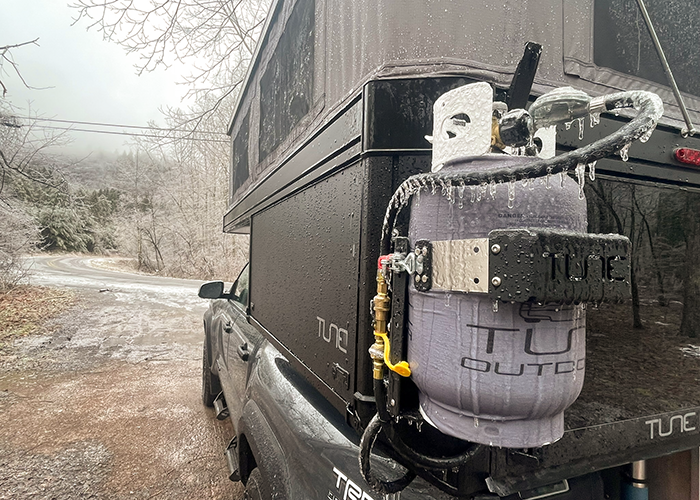
For him, that comfort is what makes longer trips possible in the first place.
Learning as They Went
More than 100 days on the road gave Todd plenty of opportunities to fine-tune his setup.
He added ceiling storage for gear and fly rods, reworked the bench, and redesigned a custom mosquito-net “bug room” off the back of the camper.
There were also a few challenges along the way. Todd worked with the Tune team to address a minor camper issue and later repaired his Dometic refrigerator himself when it stopped working around day 80.
“Tune was super helpful and responsive,” Todd said.
For Todd, those moments reinforced something he learned throughout the trip:
“Homework pays off,” Todd said.
That same mindset carried over to his setup. He added backups for essential systems, including multiple ways to power Starlink, a Garmin inReach for emergency communication, redundant water storage, and even a way to use the camper’s house battery to jump the truck.
His advice for anyone planning a similar trip?
“Do your homework and be prepared,” Todd said.
The Journey Was the Destination
Reaching Tuktoyaktuk was exciting, but it was also bittersweet. After nearly two months of traveling north, getting there meant that part of the trip was coming to an end.
For Todd, the destination was never really the point.
“Going to Tuk was almost a superficial thing to enable the journey,” Todd said.
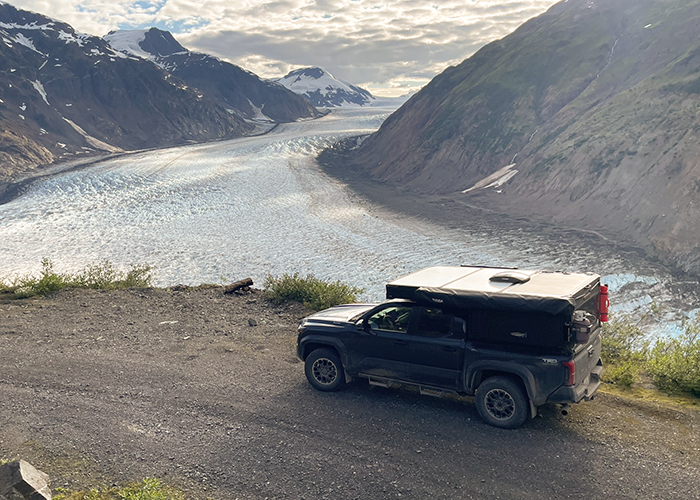
Some of his favorite memories came along the way, particularly in northern British Columbia. One morning at Fish Creek Wildlife Observation Site became a highlight of the trip.
“We showed up right at dawn. We watched a young male bear for two hours hunting for salmon,” Todd said.
After thousands of miles and months of travel, Todd came home with plenty of ideas for the next adventure. Alaska is already on the list for next year.
He also came away with a new appreciation for the Tune owner community.
“The Tune Owner Group is so good it made me get a Facebook,” Todd joked.
And after putting his M1 through more than 100 days of life on the road, he understands why Tune owners tend to be so passionate about their campers.
“Tune has a cult-like following because of the quality of the camper,” said Todd
For Todd and his wife, the M1 became a comfortable home base that could still go where they wanted to explore.
And after 100 days of living out of it, Todd isn’t done yet. There’s still a lot more road to explore.
Where would you take your Tune? Build your M1 and start planning what’s next.
FAQs
Are Tune M1 truck campers good for long-term travel?
Yes. Todd spent more than 100 days traveling in his Tune M1 and found it comfortable enough for extended life on the road. He especially appreciated the spacious bed, Truma heater, DIY water system, and having enough room to spend time inside when the weather turned bad. For Todd, that balance of comfort and capability was what made the Tune M1 work so well for long-term travel.
Can you take a truck camper to the Arctic?
Yes. Todd took his Tune M1 all the way to Tuktoyaktuk in Canada’s Northwest Territories, covering roughly 9,000 miles along the way. A trip to the Arctic takes some extra planning, especially when it comes to changing weather, rough roads, and long stretches without services. Todd prepared by making sure he had backups for essentials like power, water, and communication, so he was ready when things didn’t go exactly as planned.
What do you need for a long overlanding trip?
A reliable setup, plenty of preparation, and backups for your most important systems can make a big difference on a long overlanding trip. Todd’s biggest advice is to “do your homework and be prepared.” His setup included multiple ways to power Starlink, a Garmin inReach for backup communication, two water systems, and a way to use his camper battery to jump his truck if needed. The exact setup will vary with each trip, but having a backup plan for essentials like power, water, food storage, and communication is especially important when traveling in remote areas.

.avif)